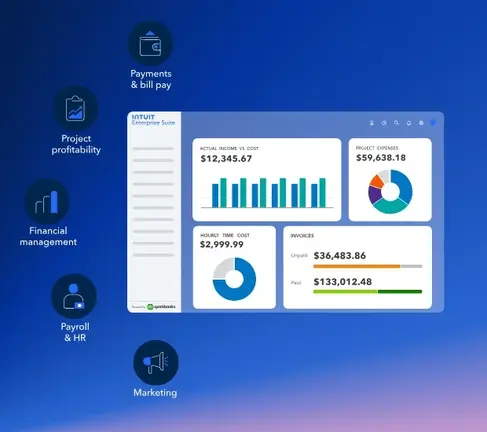
Resource hub for growing finance teams
Intuit Enterprise Suite Resources
Guides, comparisons, and release notes on evaluating, migrating to, and running Intuit Enterprise Suite, organized around where your business is today.
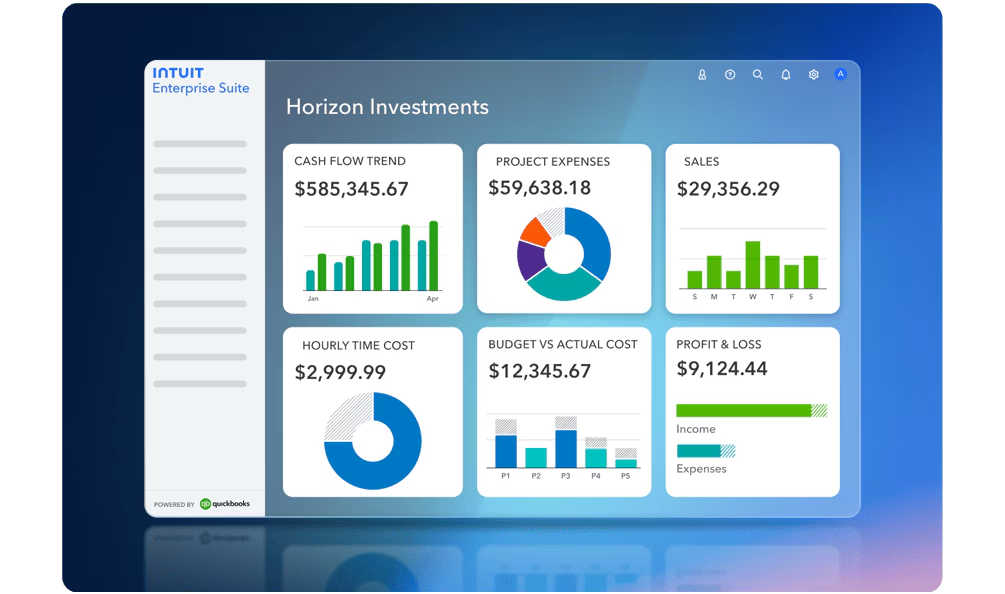
Where Are You Starting From?
Choose the option closest to your situation and we will point you to the three articles worth reading first.
Coming from QuickBooks Online Advanced
You already know the QuickBooks interface, which makes this the shortest move in the Intuit family. The questions that matter are whether you have actually reached the ceiling of QuickBooks Online Advanced and how to move without losing history or rebuilding your reports from scratch.
Book a ConsultationComing from QuickBooks Desktop Enterprise
Moving from a desktop system to the cloud changes more than where your data lives. Start with how the three Intuit products compare, then plan the migration itself and decide how much history is worth bringing across.
Book a ConsultationComing from NetSuite or Another ERP
If your ERP has become more system than your finance team needs, these articles show where Intuit Enterprise Suite covers the same ground, what the move costs over time, and what a well-run implementation looks like.
Book a ConsultationRunning a Multi-Entity Group
Businesses with several companies, locations, or portfolio holdings usually feel the strain first in consolidation and intercompany work. This reading path covers how Intuit Enterprise Suite handles entities, eliminations, and reporting by dimension.
Book a ConsultationSuggested reading order
- Intuit Enterprise Suite Multi-Entity Accounting: Why It Is Not Just a Single Entity Upgrade
- Intercompany Eliminations in Intuit Enterprise Suite: A Guide
- Intuit Enterprise Suite Dimensional Reporting Tutorial: Go Beyond Class Tracking
Already Running Intuit Enterprise Suite
Go-live is the point where adoption work begins. Use these articles to train your team, tighten your setup, and keep up with what Intuit has added to the platform this year.
Book a ConsultationSuggested reading order
- Intuit Enterprise Suite Training: From Setup to Smarter Decisions, Faster
- Intuit Enterprise Suite Implementation Best Practices: A Complete Guide
- Intuit Enterprise Suite Summer Release: What’s New for Growing Businesses
Get the Implementation Roadmap
The six steps we take every Intuit Enterprise Suite implementation through, from strategy and architecture to ongoing support, and what happens in each one.
Get the RoadmapStep 1 of 6
Strategy & Architecture
We design your entity structure, chart of accounts, and reporting dimensions around how your business operates.
Step 2 of 6
Data Migration
Clean, mapped, and validated data moves from your current accounting platform into IES. Every implementation includes it.
Step 3 of 6
Report Design
The reports your team relies on are rebuilt in IES and checked against your current numbers before anyone goes live.
Step 4 of 6
AI Configuration & Workflow Design
Approvals, intercompany postings, and integrations are configured around your finance team and tested end to end.
Step 5 of 6
Training
Your team learns IES on its own migrated data, in sessions tailored to each role.
Step 6 of 6
Ongoing Services
We support your first month-end close in IES and stay on as your business grows.
Latest Articles
New Intuit Enterprise Suite articles appear here automatically as they are published.
Year-End Tax Planning for Businesses: 2026 Changes and December 31 Moves
Year-end tax planning gives a business owner a short window to lower the 2026 tax bill, and most of that window closes at midnight on December 31. This year the window matters more than usual. The One Big Beautiful Bill Act, signed in July 2025, changed how equipment, research costs, owner income, and charitable gifts…
QuickBooks Desktop to Intuit Enterprise Suite Migration: A Complete Walkthrough
If you have been running your business on QuickBooks Desktop for years, the idea of migrating to Intuit Enterprise Suite can feel like a significant lift. There are more moving parts than a standard software upgrade, and the stakes are high when your financial data is involved. But here is the reality: the QuickBooks Desktop…
5 Signs You’ve Outgrown QuickBooks for Intuit Enterprise Suite
You may have outgrown QuickBooks long before the software gives you any warning. The bank feeds still sync and the reports still run, so nothing looks broken. Meanwhile, your team spends more of each month working around the system than working in it. That gap widens one spreadsheet at a time. This post covers five…
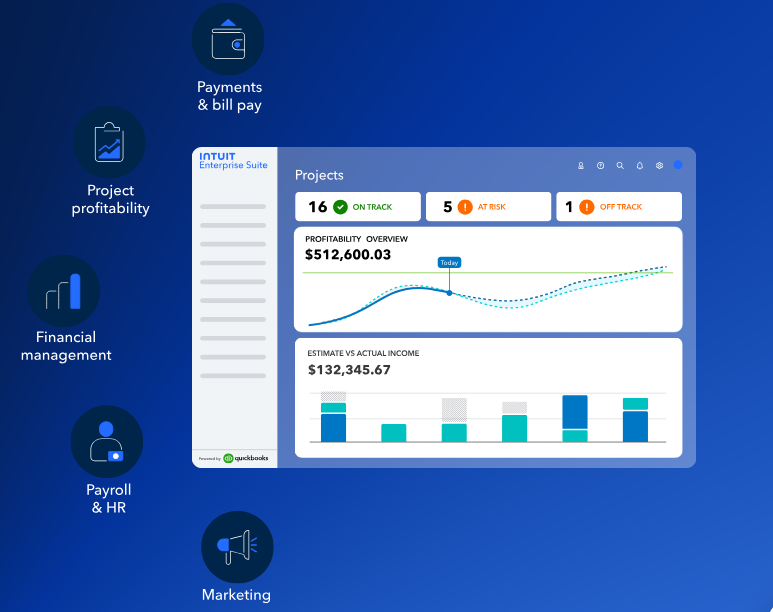
Intuit Enterprise Suite at a Glance
A one-page overview of what Intuit Enterprise Suite brings together, how Out of the Box implements it, and how to book a strategy session with our team. It is a useful thing to forward to an owner or CFO who is still weighing the move.
Watch On Demand
Prefer to see the product in action? Both sessions are recorded and free to watch.
Webinar
Stop Exporting, Start Deciding
Breaking free from manual reporting with Intuit Enterprise Suite
How finance teams replace monthly spreadsheet rebuilds, multi-file consolidation, and slow closes with real-time reporting.
Lindsay Pinkos and Joe Mondello, Out of the Box
Watch the RecordingWebinar
Intuit Enterprise Suite Overview
Smarter workflows with QuickBooks integration
What Intuit Enterprise Suite does, how it connects with the QuickBooks workflows your team already uses, and which growing businesses it fits best.
Hosted with Intuit
Watch the RecordingLive webinar: Thursday, October 29 at 9am PT
Outgrown Your Systems? Scale Your Construction Business Without Starting Over. See how multi-entity contractors use Intuit Enterprise Suite for job costing they can trust, a faster close, and consolidated reporting without spreadsheets. Cannot attend live? Register and we will send you the recording.
Release Notes
Intuit updates Intuit Enterprise Suite several times a year. Each release below links to our breakdown of what changed and who it affects.
August 2026 Latest
Summer 2026 Release
Multi-attribute reporting, faster multi-entity close, and new AI tools.
Read the BreakdownNext release
Coming Next
Our breakdown of the next Intuit Enterprise Suite release will be added here as soon as Intuit announces it.
Browse Every Article
Filter by topic. Newest articles appear first.
Evaluating
5 Signs You’ve Outgrown QuickBooks for Intuit Enterprise Suite
September 28, 2026
Read More
Evaluating
Intuit Enterprise Suite vs QuickBooks Enterprise and QuickBooks Online Advanced
September 23, 2026
Read More
Evaluating
Is Intuit Enterprise Suite Worth It? ROI and Total Cost of Ownership Explained
September 15, 2026
Read More
Multi-Entity and Reporting
Intuit Enterprise Suite Multi-Entity Accounting: Why It Is Not Just a Single Entity Upgrade
September 9, 2026
Read More
Releases and Training
Intuit Enterprise Suite Summer Release: What’s New for Growing Businesses
August 13, 2026
Read More
Migration and Setup
Migrating Historical Financial Data to Intuit Enterprise Suite
August 10, 2026
Read More
Migration and Setup
How to Migrate Your Chart of Accounts to Intuit Enterprise Suite
July 6, 2026
Read More
Migration and Setup
Migrating QuickBooks Online Advanced to Intuit Enterprise Suite
June 11, 2026
Read More

Releases and Training
Intuit Enterprise Suite Training: From Setup to Smarter Decisions, Faster
April 10, 2026
Read More
Multi-Entity and Reporting
Intercompany Eliminations in Intuit Enterprise Suite: A Guide
March 26, 2026
Read More
Multi-Entity and Reporting
Intuit Enterprise Suite Dimensional Reporting Tutorial: Go Beyond Class Tracking
March 18, 2026
Read More
Migration and Setup
Intuit Enterprise Suite Implementation Best Practices: A Complete Guide
February 13, 2026
Read More
Migration and Setup
Step-by-Step Guide to an Intuit Enterprise Suite Migration
February 2, 2026
Read MoreDetails
Short answers to the questions we hear most, with a link to the full article where there is one.
The common signals are manual consolidation across companies in spreadsheets, reaching user limits, reports that take days to assemble, and intercompany activity that is hard to track. If several of those sound familiar, our article on the five signs you have outgrown QuickBooks walks through each one. Read the five signs.
Most businesses move current-year transactions, open balances, and active customers, vendors, and fixed assets, then archive older years for reference. The right answer depends on your audit, reporting, and comparison needs, which our historical data guide covers in detail. Read the historical data guide.
For many mid-market and multi-entity businesses it is. Intuit Enterprise Suite covers multi-entity accounting, consolidation, and dimensional reporting without the cost and timeline of a traditional ERP rollout, although some businesses with complex operational needs are still better served by an ERP. Our comparison lays out where each one fits. Read the comparison.
Intuit released updates to Intuit Enterprise Suite in February, May, and August of 2026. We publish a breakdown of each release, and every one is listed in the release notes section of this page.
Yes. Beyond implementation and migration, our team provides training, ongoing bookkeeping and accounting, and fractional controller and CFO support for businesses running Intuit Enterprise Suite. Read about training.
Planning a Move to Intuit Enterprise Suite?
Our team implements, migrates, and supports Intuit Enterprise Suite for multi-entity businesses, franchises, construction firms, and private equity-backed groups. A consultation is the quickest way to find out what your move would involve.